There is a conversation happening in NHS trusts that rarely makes it into board reports or appraisal forms.
It happens in car parks after long days. In quiet moments before the next meeting. In the small hours of the morning when sleep won't come.
It is the conversation senior female Directors of Nursing, Clinical Leads, and Chief Nurses have with themselves.
Am I still good enough for this?
Not because the capability has gone. You don't reach Director of Nursing or Chief Nurse without exceptional judgement, resilience, and an almost stubborn commitment to patient care. The capability is not the issue.
The issue is what sustained, unrelenting pressure, without adequate recovery, does to even the most capable women leaders over time.
What Nobody Is Saying Out Loud
You are simultaneously accountable for patient safety, leading workforce strategy amid ongoing shortages, managing deeply complex cultural dynamics, and carrying the emotional weight of staff wellbeing alongside patient outcomes. You are making high-stakes decisions, often with incomplete information, and you are expected to do all of this consistently, visibly, and without pause.
This is not pressure in short bursts. This is sustained clinical leadership under load.
The NHS data reflects just how heavy that load has become. Research consistently shows that women in healthcare are at significantly greater risk of stress and burnout than their male colleagues. The very people responsible for holding the system together are often the least protected from it.
What It Actually Feels Like
The impact of sustained load is rarely dramatic. It does not announce itself. It creeps in.
You notice that decisions that used to feel instinctive now take more effort. Strategic thinking keeps getting pulled into operational firefighting, and you cannot seem to hold the two apart. Your emotional capacity, the part of you that stays calm, reads the room, holds the culture together, feels stretched thinner than it used to.
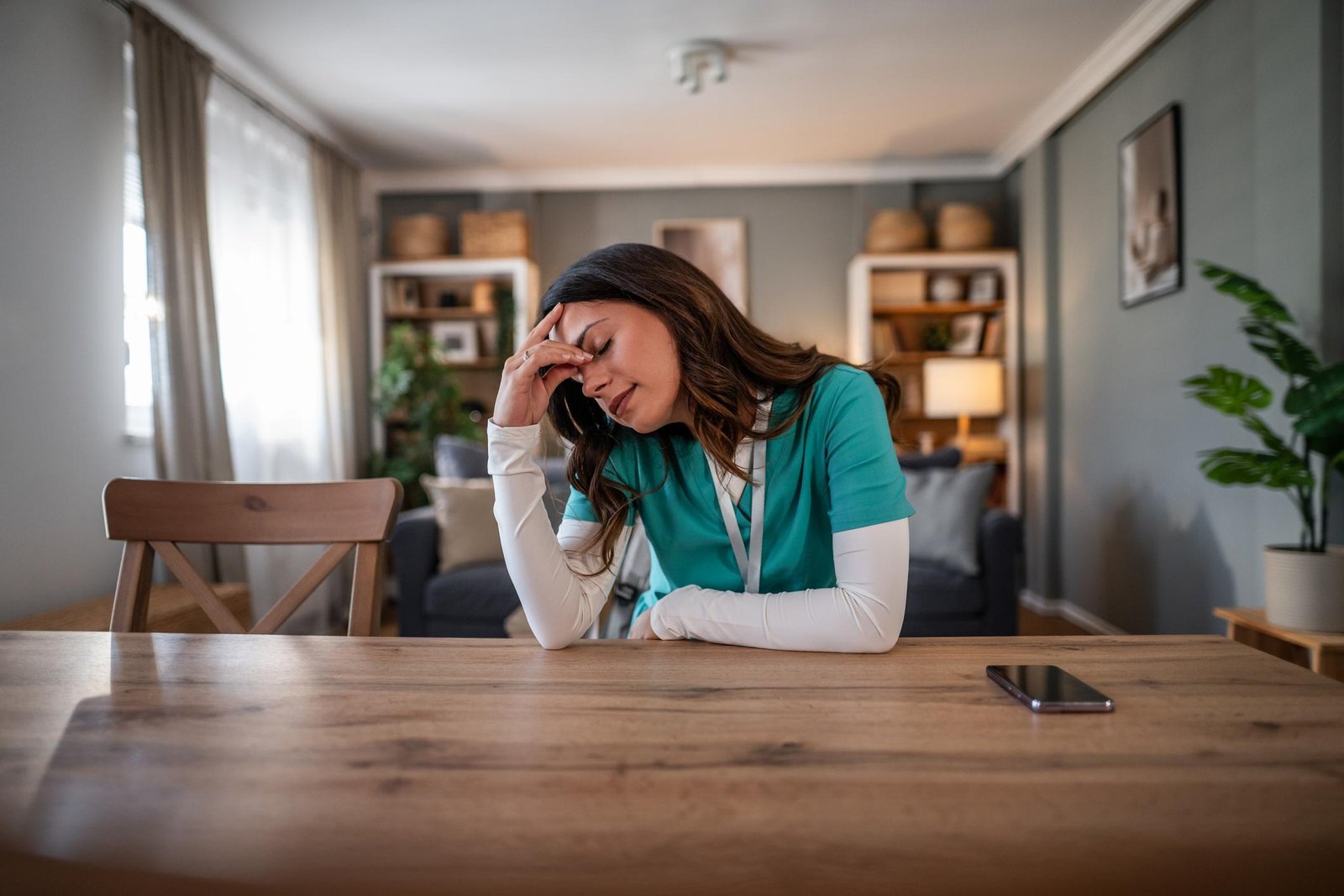
You go home exhausted but cannot switch off. You wake at 3am running through a conversation or a decision, turning it over and over. You are the steady presence everyone else leans on, and there is nowhere for you to put it down.
From the outside, nothing looks wrong, but internally, the system is compensating, and compensation has limits.
The Trap High Performers Fall Into
Here is what makes this particularly difficult for women leaders at your level.
Your career was built on stepping up. On carrying responsibility. On being the person who did not flinch when things got hard. That instinct is what got you here.
Under sustained pressure, that same instinct becomes a trap.
The system is asking for recovery. Every high-performing cell in your body tells you to give more. To push through. To handle it.
So you do. Until you notice that your performance, your clarity, your influence, your ability to lead proactively rather than reactively, is quietly eroding. Not dramatically. Not visibly, but enough that you can feel it, even if no one else can see it yet.
A More Accurate Question
Most senior leaders Anthony works with are asking the wrong question.
They are asking: Am I still performing at my best?
A more useful question is: What level of sustained load am I carrying, and where is my recovery?
Leadership performance at this level is not just about expertise. It is about maintaining the neurological and physiological conditions that allow that expertise to show up consistently.
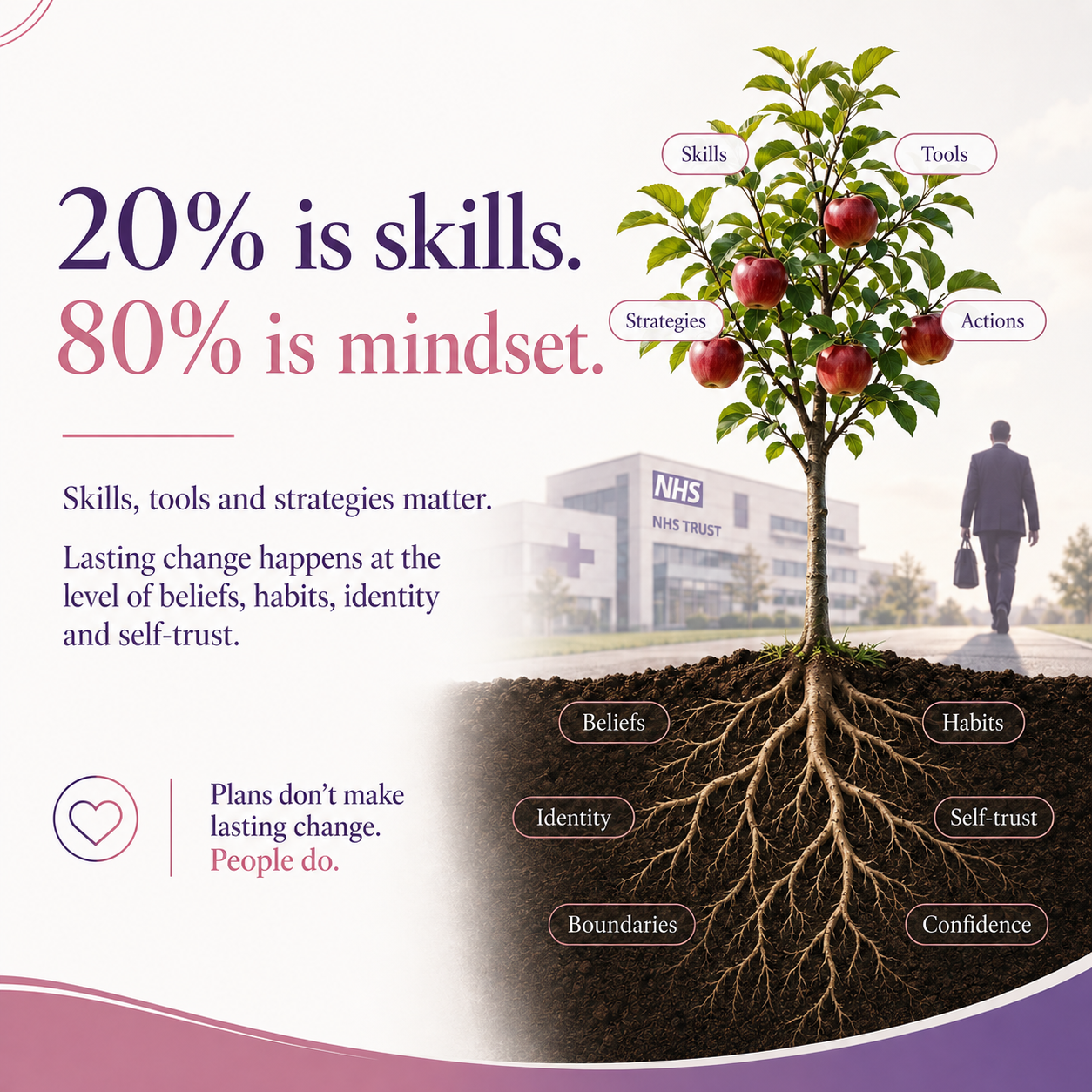
Neuroscience is unambiguous on this: the brain is plastic, even in adulthood. Through neuroplasticity, habitual patterns of stress response are not fixed forever. With the right approach, you can genuinely retrain your nervous system to move from reactive to regulated. Chronic stress without recovery degrades the prefrontal cortex's ability to regulate decision-making, emotional responses, and strategic thinking, but the reverse is also true: with deliberate, evidence-based practice, you can rebuild that regulation.
You cannot think your way out of a stressed nervous system. You have to train it.
What Sustainable Leadership Actually Looks Like
The leaders who sustain high performance over time are not working less. They are working differently.
They recognise early indicators of cognitive and emotional overload before those indicators become performance problems. They protect small but critical moments of recovery during the week, not as a luxury, but as a leadership responsibility. They create deliberate space for strategic thinking rather than living entirely in reactive mode.
They have stopped treating their own sustainability as secondary to everyone else's.
In my work with senior female healthcare leaders, using The Sustainable Leadership Programme, a structured 12-session system built on neuroscience, women are cutting their stress by 50%, reclaiming two personal hours every week, and sleeping through the night again. Not by working fewer hours. Not by dropping their standards, but by rewiring how they respond to pressure altogether.
A Final Thought
There is no shortage of capability among Chief Nurses and senior female clinical leaders in the NHS, but there is a growing recovery gap.
If that gap is not addressed, even the strongest leaders will feel their performance, clarity, and influence begin to erode, not because they are not good enough, but because no clinical leader, however capable, however committed, can sustain this level of demand without renewal.
If this resonates, the question to sit with is not how do I perform better.
It is how do I protect the conditions that allow me to perform at all.