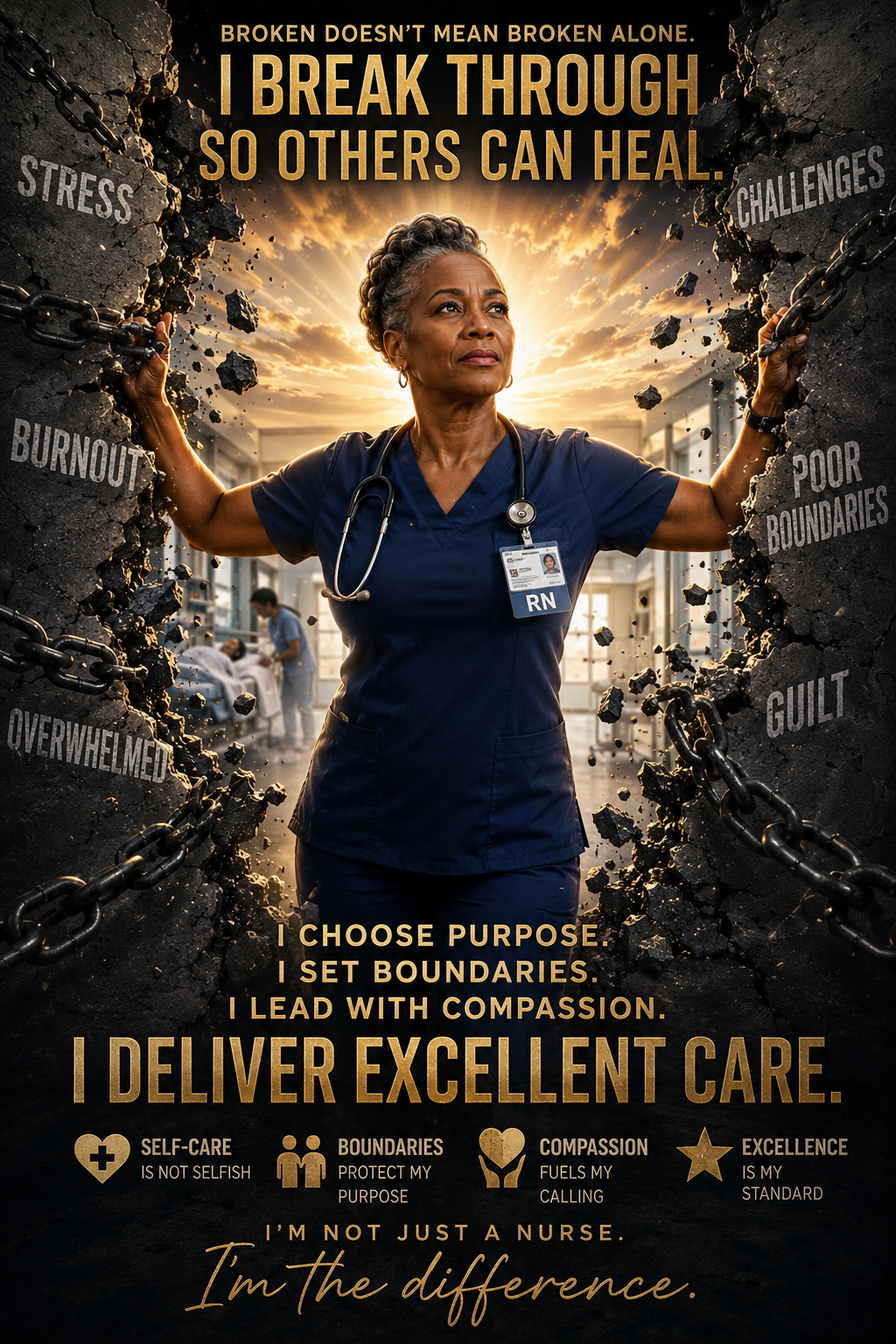
There is a conversation happening in NHS corridors that rarely makes it into board reports or wellbeing strategies. It is the conversation Black women in senior healthcare roles have with each other in quiet moments, about exhaustion that goes beyond long shifts, about carrying a weight that their colleagues simply do not carry, about feeling that they have to work twice as hard to be seen half as clearly.
This is not perception. The research is unambiguous, and until we name it honestly, we cannot begin to address it.
The Data We Cannot Ignore
The NHS employs over 1.3 million people. Women make up 76.5% of that workforce, and yet when it comes to senior leadership, the numbers tell a starkly different story.
Research from the University of Manchester found that discrimination is the single biggest career obstacle for women of colour in the NHS. Not lack of ambition. Not lack of ability. Not lack of commitment. Discrimination.
The Double Burden
Here is what the general NHS burnout statistics do not capture: Black women in senior nursing and healthcare leadership roles are not simply dealing with the same pressures as their colleagues. They are dealing with those pressures plus a set of additional stressors that are rarely acknowledged in formal wellbeing programmes.
Over four decades of global research has confirmed that women in healthcare burn out at significantly higher rates than their male counterparts. Contributing factors include gender inequality, heavier caring responsibilities outside work, and being assigned more emotionally complex patient cases.
For Black women, those pressures are compounded. The 2025 NHS Staff Survey shows that work-related stress has risen again this year, now affecting 42.3% of NHS staff, but aggregate data does not show what is happening beneath the surface for specific groups. Black women in senior NHS roles are absorbing more pressure from more directions, institutional, interpersonal, and societal, while often having access to less support.
The Cost of Not Belonging
When you spend your working life in an environment where you have to constantly prove yourself, where your contributions are questioned more often than your colleagues', where you are sometimes assumed to be a junior member of staff despite your band and your experience, the toll on your nervous system is cumulative and profound.
Chronic stress of this kind does not simply make you tired. It dysregulates the autonomic nervous system, sustains elevated cortisol levels, disrupts sleep, and over time erodes the emotional resilience that makes great leaders exceptional.
What Is Currently Being Done, and Why It Is Not Enough
NHS England has published guidance on race equality. The Workforce Race Equality Standard tracks representation data. Some Trusts have mentoring programmes and networks for staff from ethnic minority backgrounds.
These are important, but they are not enough.
Most wellbeing programmes in the NHS are designed around the average experience. They offer generic resilience tools, mindfulness apps, and employee assistance programmes. They do not account for the specific, compounding stressors that Black women in leadership carry. They do not create the psychological safety that allows honest conversation about discrimination, identity, and the invisible tax of constantly navigating a system not built with you in mind.
Generic support for a non-generic problem is not support. It is a box-ticking exercise.
What Actually Helps
The research on effective interventions for burnout among marginalised groups points consistently in one direction: specificity, safety, and genuine acknowledgement.
Black women in NHS leadership need spaces where their full experience is seen, not just the professional role, but the human being carrying it. Where the additional weight is named, not minimised. Where the tools offered are practical, measurable, and designed around the reality of their lives.
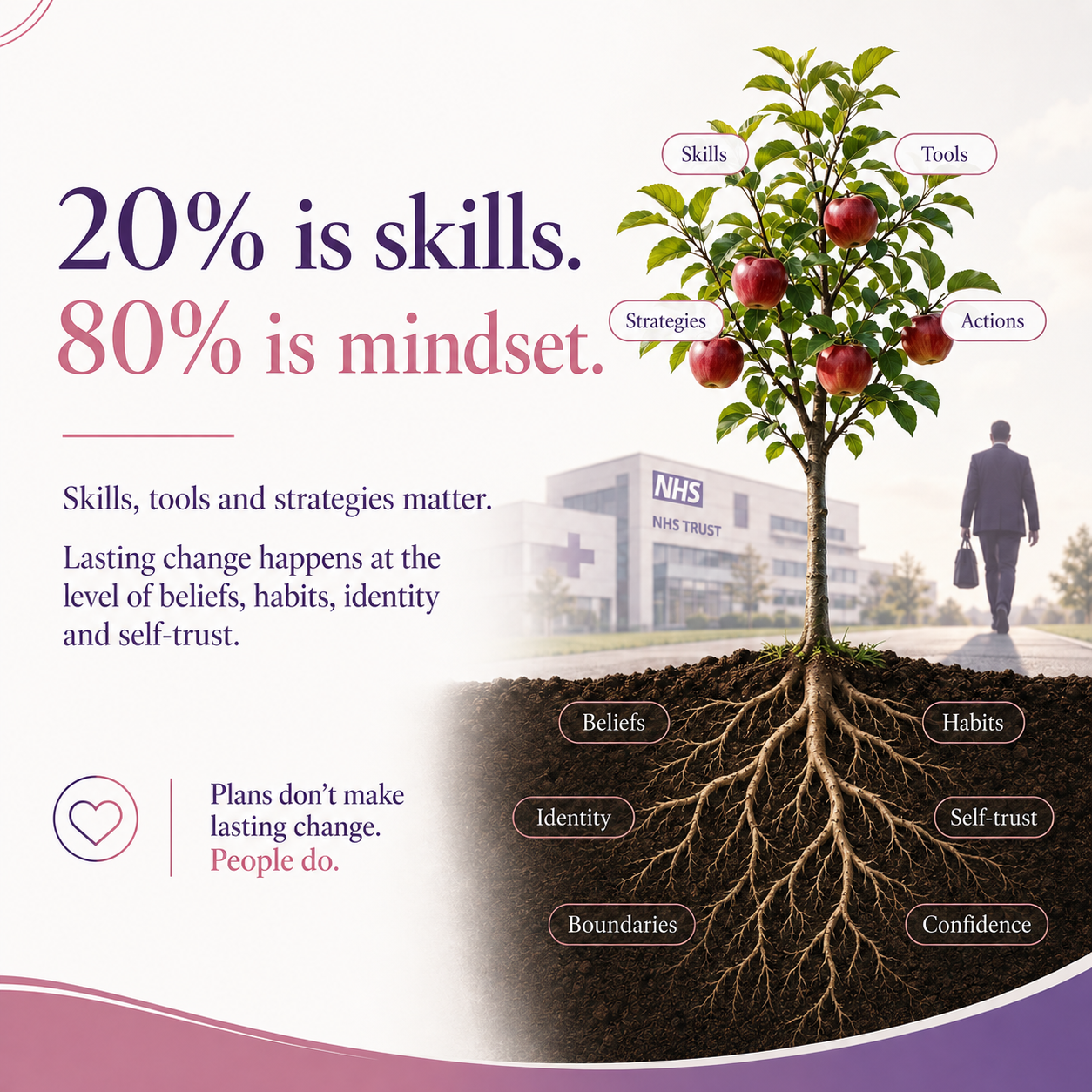
This means coaching and support that addresses the nervous system directly, not simply offering coping strategies, but working with the biology of chronic stress. Neuroplasticity research confirms that the stress response can be retrained. Polyvagal Theory shows us how to move the nervous system from a state of chronic activation toward regulated calm. These are not soft concepts. They are evidence-based mechanisms that work when applied with the cultural sensitivity and professional understanding that this audience deserves.
A Word on Networks
One of the most powerful protective factors for Black women in senior NHS roles is connection with others who share their experience. Networks like the Black National Nurses Network exist precisely because peer understanding cannot be replicated by institutional programmes. There is something profoundly restorative about being in a space with people who do not need you to explain the context before they can hear what you are saying.
What Needs to Change
At a systemic level: NHS Trusts need to go beyond data collection and create genuine accountability for the progression and wellbeing of Black women in senior roles. Representation at the top is not just a fairness issue. It is a patient outcomes issue, a retention issue, and a financial one.
At an individual level: if you are a Black woman in senior NHS leadership who is exhausted, who feels unseen, who is carrying more than you should have to, you deserve targeted, specific, evidence-based support. Not a generic wellbeing app. Not another resilience workshop that does not speak to your reality.
Your experience is real. The data backs it up, and there are tools, grounded in neuroscience and designed for leaders like you, that can genuinely help.

References
University of Manchester, Discrimination Is the Biggest Career Obstacle for Women of Colour in the NHS
NHS England, Workforce Race Equality Standard 2023 Data Analysis Report
George Washington University, Women in Healthcare Face Significantly Higher Burnout Rates
NHS Staff Survey 2025, NHS Employers
PMC, Polyvagal Theory: Current Status and Clinical Applications (2025)
PMC, Physical and Emotional Interventions in Modulating Neuroplasticity (2025)
ResearchGate, Perceived Obstacles to Executive Leadership Roles for Women of Ethnic Background in NHS